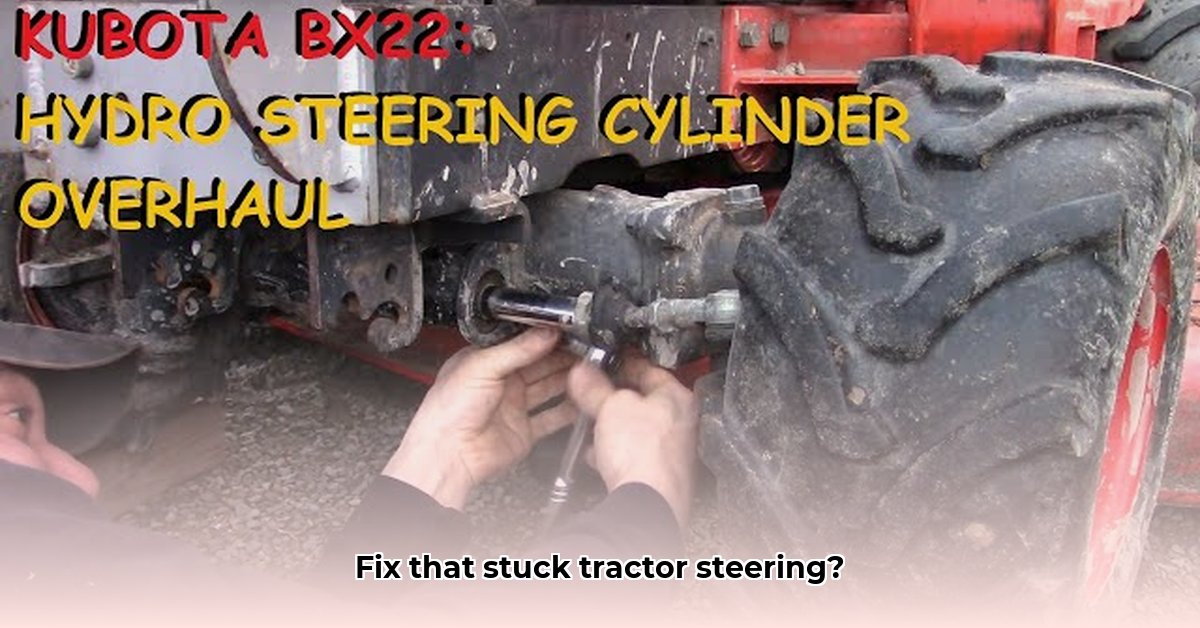
Steering problems can bring your tractor to a standstill. This comprehensive guide provides a step-by-step process for removing, inspecting, and (if necessary) replacing your tractor's steering cylinder. Even if you're a novice, following these instructions carefully will help you successfully complete this task. Remember, safety is paramount throughout this procedure. For a visual guide to tractor parts, check out this helpful resource on tractor parts.
Safety First: Protecting Yourself and Your Equipment
Before you begin, prioritize safety. Working with heavy machinery and hydraulic fluids requires caution.
- Disconnect the Battery: This prevents accidental electrical surges that could cause injury or damage.
- Secure the Tractor: Use appropriately rated jack stands to support the tractor securely. Never rely solely on the lift arms. A collapse could have severe consequences.
- Personal Protective Equipment (PPE): Wear safety glasses to protect your eyes from hydraulic fluid and debris, gloves to protect your hands, and sturdy, closed-toe shoes.
- Release Hydraulic Pressure: Carefully release all pressure from the hydraulic system. Your tractor's owner's manual will provide specific instructions; follow them precisely. Failure to do so could result in serious injury.
Tools and Materials: Getting Equipped for the Job
Having the right tools will make the job significantly easier and safer. Gather the following:
- Socket wrench set (metric and SAE)
- Impact wrench (highly recommended for stubborn bolts)
- Wrenches (various sizes, including line wrenches for hydraulic connections)
- Jack stands and a suitable jack
- Hydraulic press (may be needed depending on cylinder mounting)
- Drain pan to collect hydraulic fluid
- Clean rags or absorbent towels
- Penetrating oil
- Your tractor's owner's manual (essential for model-specific information)
- Torque wrench (for precise tightening during reassembly)
Step-by-Step Removal Process: A Methodical Approach
Remember, these steps are general guidelines. Always consult your tractor's service manual for model-specific instructions.
- Locate and Access: Identify the steering cylinder and ensure you have clear access to all connections.
- Disconnect Hydraulic Lines: Carefully disconnect the hydraulic lines. Use line wrenches to prevent damage to the fittings. Have a drain pan ready—some fluid spillage is unavoidable. Label the lines clearly to aid reassembly.
- Disconnect Linkages: Gently detach any linkages or tie rods connected to the cylinder. Take photos before disconnecting to aid reassembly.
- Remove Mounting Hardware: Use the appropriate sockets and wrenches to remove the bolts securing the cylinder to the tractor frame. An impact wrench can significantly speed up this process, especially with seized bolts. If a bolt is particularly stubborn, apply penetrating oil and let it soak.
- Cylinder Extraction: Carefully remove the cylinder. It's likely heavy, so be prepared. A hydraulic press can significantly ease this step and reduce the risk of damage.
Troubleshooting Common Problems: Addressing Potential Challenges
Even with careful planning, you might encounter problems.
- Seized Bolts: Penetrating oil is invaluable. Allow it to soak in before attempting removal. Gentle heat (from a heat gun, not an open flame) can also help loosen them. If necessary, try an impact wrench or consider drilling the bolt out as a last resort. This should only be after consulting relevant repair literature.
- Difficult Hydraulic Connections: Line wrenches are vital to prevent damage to fittings. Penetrating oil can assist, but proceed slowly and carefully.
- Cylinder Removal Resistance: If removal is exceptionally difficult, using a hydraulic press is strongly recommended to avoid damage.
Cylinder Inspection and Replacement (If Needed): Assessing the Situation
Once removed, inspect the cylinder for damage: scratches, gouges, leaks etc. If damage is present, determine if seals can be replaced or if a new cylinder is needed. This may necessitate consulting a qualified mechanic.
Reinstallation: Returning the Cylinder to Service
Reassembly follows the removal process in reverse.
- Install Cylinder: Carefully install the steering cylinder, ensuring proper alignment.
- Reconnect Linkages: Attach all linkages and tie rods, referring to your photos.
- Reconnect Hydraulic Lines: Carefully connect the hydraulic lines, ensuring a secure and leak-free connection.
- Tighten Fasteners: Use a torque wrench to tighten all bolts to the manufacturer's specifications (found in your owner's manual). Over-tightening can strip threads.
- Inspect for Damage: Double check every connection for leaks and damage before proceeding.
Bleeding the System and Testing: Ensuring Proper Functionality
After reassembly, bleed the hydraulic system to remove trapped air. Your owner's manual will detail the correct bleeding procedure. Air in the system can severely affect steering performance. Thoroughly test the steering system for smooth and responsive operation. Any issues after this point should be addressed by a qualified mechanic.
Conclusion: Maintaining Your Tractor's Steering System
Regular inspection and maintenance significantly extend the life of your tractor's steering system and prevent costly repairs. It's recommended to keep a maintenance log to track service intervals and address issues before they become major problems. Remember: proactive maintenance is far cheaper and more convenient than emergency repairs.
Key Takeaways:
- Safety is paramount throughout the entire process.
- Having the correct tools and following a methodical approach are essential.
- Regular inspection and maintenance are crucial for preventing problems.
This guide provides a comprehensive framework, but remember to always consult your tractor's service manual for model-specific instructions and safety precautions. If you are ever unsure about any step, consult a qualified mechanic.